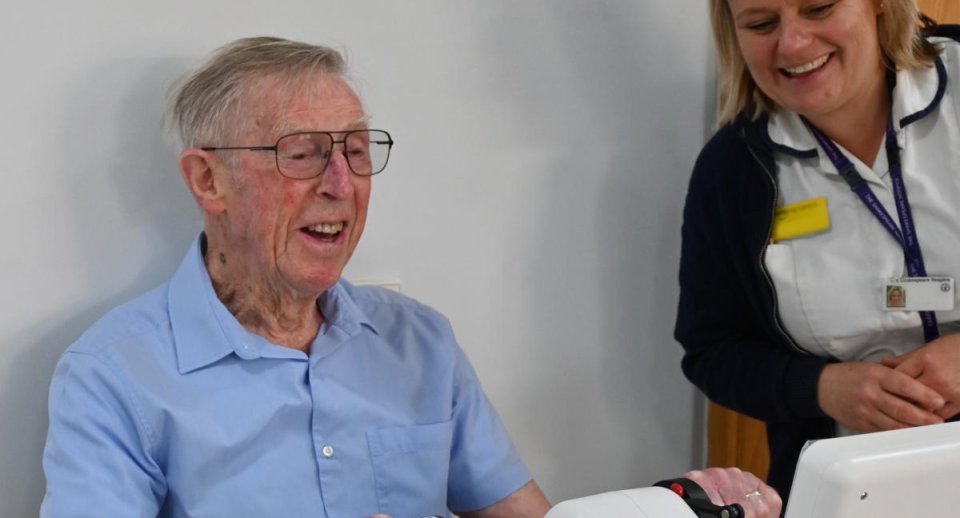
Henry Woodgate turned 90 last October. He served in the RAF, married Barbara before he was 21 (with his Commanding Officer's blessing), and spent nearly 50 years as a member of Kenilworth Lions. He is the kind of person who gets on with things.
Three years ago, Henry was diagnosed with bowel cancer following an emergency admission to Warwick Hospital. Around the same time, he was caring for his wife of 66 years, Barbara, who died in May 2022. Two enormous things, happening at once.
'The outside is fine,' he told us, with characteristic dry wit. 'It's the inside.'
Henry has been a day patient at Shakespeare Hospice ever since his diagnosis. He attends weekly exercise sessions, monthly lunches, and has built up a network of people who — like him — are living with serious illness. He drives himself here. He makes his own arrangements. And every week, he looks forward to coming.
This week is Dying Matters Awareness Week (4–10 May), and the theme this year is: Let's Talk About Death and Dying.
It sounds simple. But as Hospice UK — who run the Dying Matters campaign — point out, 27% of people find it hard to talk about death with family or friends, and 30% bottle their feelings up. When we don't talk about it, it becomes harder to cope when we face it.
Henry doesn't have that problem. He talks about his diagnosis clearly and directly. He's thought about his care pathway. He knows what he wants. And he finds that the people around him — his family, his Lions colleagues, the team here at Shakespeare Hospice — can meet him there.
That is what compassionate conversation looks like in practice.
Hospice UK describe six 'Compassionate Superpowers' that help us have these kinds of conversations: listening attentively, responding mindfully, being observant, managing silence, respecting emotions, and considering perspectives. You don't need to have the perfect words. You need to show up, pay attention, and resist the urge to fix things.
Henry's story also challenges one of the most persistent myths about hospice care: that it's only for the very end of life. He has been with us for three years. He came to us at the point of diagnosis. The support he receives — physical, social, practical — has made a difference both mentally and physically, in his own words.
"It's meeting people in the group that havent necessarily got the same problem, but certainly a similar problem. Both mentally and physically, it makes a difference."
That peer connection — the simple knowledge that you are not alone — is one of the most powerful things a hospice can offer. The Shakespeare Hospice provides this support every day for our local community.
This Dying Matters Week, we're inviting you to start a conversation. It doesn't have to be a big one. It might be asking someone how they're really doing. It might be telling a family member what matters to you. It might be finding out what hospice care actually involves — and discovering, like Henry did, that it's not what you expected.
Because talking about dying matters. And it turns out, once you start, it gets easier.
The Shakespeare Hospice has been providing outstanding palliative and end of life care to patients, their loved ones and carers across South Warwickshire for over 25 years. Based in Shottery, Stratford-upon-Avon, our Day Services are at the heart of what we do.
Like Henry, many of our patients access our Day Services from the point of diagnosis — not just in the final stages of illness. Our friendly, calm Day Hospice offers weekly exercise and therapy groups, creative therapy, spiritual care, a monthly lunch, and simply the company of people who understand. Everything is free of charge to patients registered with a GP in South Warwickshire, and free parking is available on site.
We also offer Hospice at Home, Adult Counselling, and support for children and families — wrapping care around the whole person, not just the diagnosis.
It costs £3 million a year to provide this care. The NHS funds just 12% of that. The rest depends entirely on the generosity of our community.
If you or someone you love has been diagnosed with a life-limiting illness, you don't have to wait. Make a referral online — or simply give us a call.
Help fund care like Henry's, make a donation today and support your local hospice
